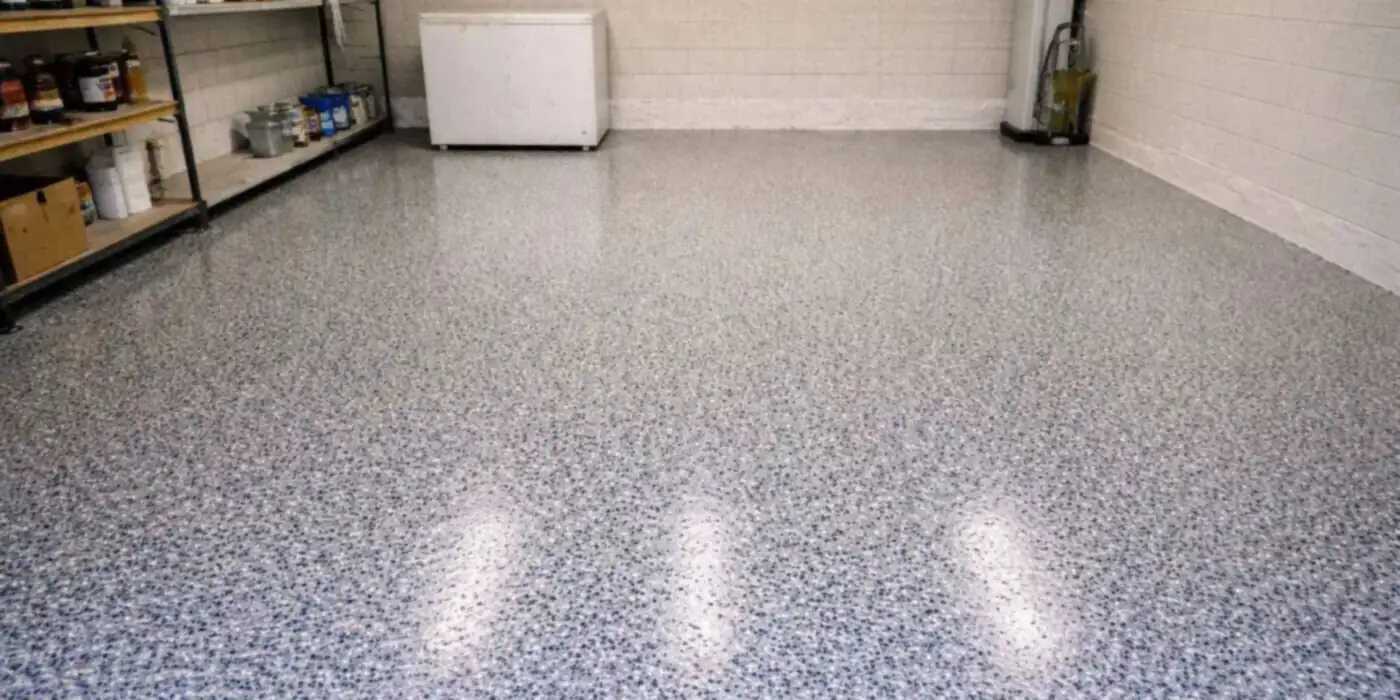
Looking after a coated floor takes very little: sweep it, mop it now and then, and keep winter salt from drying on it. There is no waxing and nothing to reseal every year. Salt Lake City adds two seasonal jobs: rinsing off the salt and magnesium chloride that ride in on your tires from late October to April, and keeping summer dust and hot-tire marks under control. Below is the everyday routine, plus stains, mats and the signs that a floor needs a repair or a fresh topcoat.
The Basic Routine
Most wear on a coated floor comes from grit, not spills. Sand, road grit and the fine dust that drifts in on dry days get ground in underfoot and under tires, and over months that sanding action takes the gloss off the topcoat. Keeping the floor swept is the single most useful thing you can do for the finish.
Once a week
Run a dust mop or soft-bristle push broom over the floor. Give the first few feet by the garage door the most attention, along with any corners where leaves collect. Five minutes is plenty.
Every few weeks
- Sweep before you mop; otherwise you are just moving grit around.
- Add a small splash of pH-neutral cleaner, or a few drops of mild dish soap, to a bucket of warm water.
- Use a microfiber mop. It lifts the film without scratching and leaves no streaks.
- Work any stubborn spot with a soft nylon brush.
- If the water was soapy, make a second pass with plain water so nothing is left behind to collect dirt.
Nothing else is required. The topcoat provides both the protection and the gloss, so there is no wax or polish to add.
What Not to Use
- Anything acidic. Vinegar, citrus-based cleaners and many rust removers slowly dull the topcoat.
- Abrasives. Scouring pads, steel wool and wire brushes leave permanent scratches. Microfiber and nylon do the job.
- Harsh solvents as an everyday cleaner. Save degreaser for an actual grease spot, and rinse it off afterward.
- A pressure washer at close range. An ordinary garden hose is enough. A tight high-pressure jet aimed at the surface can nick edges and knock flakes loose.
- Rubber-backed mats left down all winter. A mat that holds water against the floor for weeks can leave marks. See the note on mats below.
Salt Season: Late October to April
By NOAA’s normals for Salt Lake City International Airport, the median first freeze comes around October 31 and the last around April 8, and about 52 inches of snow falls in a normal year. To keep roads open, Salt Lake City spreads 16,000 to 20,000 tons of salt each winter, and magnesium chloride is a common de-icer for driveways and sidewalks. The NRMCA, the ready-mixed concrete industry’s association, notes that magnesium-based de-icers are tracked in by cars and build up on concrete surfaces. On a coated floor that buildup shows as a white, chalky haze that dulls the gloss.
Rinse before it dries
Once a week while the roads are being salted, squeegee standing water out the door, hose down the first few feet of the floor, and go over it with a damp microfiber mop. Wet salt lifts easily; salt that dries in place clings and leaves that haze.
Keep a squeegee by the door
Hang a floor squeegee on a hook beside the door and the habit takes care of itself. A minute of pushing slush out after you park stops salty water from settling along the walls and into the joints, especially in cold stretches when the door stays shut.
Choose mats that breathe
If you like a mat under the car, pick one that lets the floor breathe, and lift it now and then to rinse and dry underneath. A solid rubber-backed mat left in place for weeks holds salty water against the coating and can leave marks. A walk-off mat at the entry to the house is still a good idea, since it stops salt from being tracked indoors.
Go easy with ice melt on the driveway
Salt Lake City lists magnesium chloride, calcium magnesium acetate and sand among the de-icing options for sidewalks, steps and driveways. Whatever you choose, the apron outside the garage is bare concrete, and de-icers make freeze–thaw scaling worse there. Use as little as does the job, and hose it off when the weather breaks.
Summer: Hot Tires, Dust and Sun
Hot-tire marks
The airport averages about 62 days a year at 90°F or hotter. Park after a long drive on a day like that and the hot tires can leave dark smudges on the floor. Deal with them while they are fresh: pH-neutral cleaner, a few minutes to soak, then a soft brush. If the coating itself ever comes up under a tire, rather than just marking, that signals a bonding problem and is worth a call.
Dust on dry days
Salt Lake summers are hot and very dry, and with the door open, fine dust settles on the floor quickly. A sweep or dust-mop pass a couple of times a week keeps it from grinding into the finish.
Sun through the open door
The sun is stronger at our elevation than at sea level. Flake floors are finished with a UV-resistant protective topcoat, so there is nothing special to do beyond regular cleaning; a clean floor simply keeps the finish looking clear.
Spills and Stains
Because the coating is sealed, spills mostly stay on top instead of soaking in, and they come up with a bit of patience. Speed helps: the fresher the spill, the easier the cleanup.
Oil and car fluids
Soak up fresh oil with a rag or shop towels first, then scrub with warm water and a mild degreaser that says it is safe for coated floors. One or two rounds usually does it. Antifreeze is poisonous to pets, so wipe it up immediately.
Rust
Take away the metal that left the mark, then scrub with warm water and a soft brush. For a mark that won’t budge, choose a rust remover made for coated or sealed floors, since many are acidic, and rinse thoroughly afterward.
Paint, glue and caulk
Wait for drips to harden, then pop them off with a plastic scraper; a little warm, soapy water helps loosen the edges. Avoid paint strippers and acetone, both of which can damage the topcoat.
Scuffs and shoe marks
A soft brush with warm water and pH-neutral cleaner handles them. Let the cleaner sit for a few minutes on the stubborn ones, and keep abrasives away.
Dull Lane or Lifting Edge?
Book a free look at the floor and get a straight answer: a good clean, a fresh topcoat, or a repair.
Basement Floors
Downstairs floors carry lighter traffic and never see road salt, so regular sweeping and mopping handle most of their care. The real wear comes from furniture and gym gear: put felt pads on chair and table legs and a rubber mat under free weights.
If water ever gets in, a coated floor mops out and dries quickly, but the coating itself does not make the basement waterproof. Keep gutters, grading and any sump pump working. And if dampness seems to be coming up through the slab, give us a call: the Utah Geological Survey has mapped shallow groundwater in parts of the valley, particularly the west side, and it is better to know the cause before it reaches the coating.
The Salt Lake City Care Calendar
| When | What to do |
|---|---|
| Fall (Oct–Nov) | Clear out leaves and grit, hang the squeegee before the first freeze, and have any chips fixed while it is still mild. |
| Winter (Dec–Feb) | Push slush out after parking, hose the door strip weekly, and lift mats to rinse beneath them. |
| Spring (Mar–Apr) | Give the floor a full wash to remove salt residue, then look over the door strip for dull or worn patches. |
| Summer (May–Sep) | Sweep more often when it is dry and dusty, mop every few weeks, and wipe off hot-tire marks as they show up. |
When to Call for a Repair or Recoat
Routine cleaning is yours to handle. Some signs, however, point to the coating itself, and dealing with them early keeps a minor fix minor:
- Lifting or flaking. Edges curling up, or coating coming loose in sheets, means a bond or moisture issue below the surface. No cleaner will solve it.
- Blisters or bubbles. Usually a sign of moisture pushing up from the slab.
- Chips through to the concrete. A small chip is easy to patch. Leave it open over a winter and salty water gets at the slab.
- A dull, worn lane at the door. The topcoat is the layer meant to wear. When the traffic lane is worn through, a fresh topcoat over proper prep restores it.
- New or widening cracks. The installer can tell you whether a crack is cosmetic or a question for a structural engineer.
Call (801) 618-0565 or book a visit online. Our repair and maintenance page walks through what a recoat involves.
Frequently Asked Questions
How do I get road salt off my epoxy garage floor?
Rinse it off before it dries. During salt season, squeegee meltwater out after parking, hose the strip by the door with clean water about once a week, then go over it with a damp microfiber mop and a pH-neutral cleaner. Dried salt leaves a white haze that rinsing early avoids.
Is vinegar safe for an epoxy floor?
Skip it. Vinegar and other acids can dull the topcoat over time, while warm water with a little pH-neutral cleaner or mild dish soap cleans just as well.
Why do black tire marks show up on my garage floor in summer?
Hot tires leave rubber residue, most of all after a drive on a 90°F day. Let a pH-neutral cleaner sit for a few minutes, then scrub with a soft brush; fresh marks are the easiest to lift.
What kind of mat should I use on a coated garage floor?
One that lets the floor breathe, lifted now and then so you can rinse and dry underneath. Solid rubber-backed mats left down for weeks trap salty water against the coating and can mark the finish.
How often does a coated floor need cleaning?
A weekly sweep or dust-mop plus a damp mop every few weeks. From late October to April, also rinse the strip inside the garage door once a week to clear salt and magnesium chloride.
When is it time for a new topcoat?
Once the traffic lane, usually the strip by the garage door, looks dull or worn through the clear layer. A fresh topcoat over proper prep renews it without redoing the whole floor, and a free visit will tell you whether it is time yet.
Related Articles
Why Salt Lake City Epoxy Floors Peel at the Garage Door
Why the first foot inside the door is where a coating fails first, and how grinding and moisture checks prevent it.
How Salt Lake City’s Snow, Salt and Sun Test an Epoxy Floor
About 112 freezing nights and hot, dry summers: what Salt Lake City weather does to a coated floor.
Epoxy Flooring Cost in Salt Lake City: What Sets Your Price
Size, slab repairs, moisture, finish and prep: what moves the price of a Salt Lake City garage or basement floor.