Garage Floor Epoxy Salt Lake City: Made for Salt, Snow & Sun
Every epoxy garage floor the crew coats around Salt Lake City is diamond ground, repaired and sealed under a protective topcoat, so road salt and oil wipe off instead of soaking in.
Want to talk to the installer? During business hours we can put you through on the same call.
What Salt Lake Weather Does to a Bare Garage Slab
Winter in the valley starts early and leaves late. By NOAA's 1991–2020 normals, the median first freeze at the airport comes around October 31 and the last one around April 8, with about 52 inches of snow in between. Salt Lake City alone spreads 16,000 to 20,000 tons of salt on its streets each winter, and magnesium chloride is a common de-icer for driveways and walks. Your tires pick that mix up on I-15 or Bangerter Highway, and the slush melts off the car onto the garage floor.
On most freezing nights here, the next afternoon climbs back above 32°F. Bare concrete soaks up the salty meltwater, and the freezing that follows flakes the surface away, which concrete engineers call scaling. Salt Lake City's building code even rates concrete weathering exposure here as severe. The apron and the first few feet inside the door take the worst of it, so that is where a sealed surface, with the salt water left sitting on it ready to be squeegeed out, matters most.
Summer flips the problem. July afternoons run hot, and the valley floor sits at roughly 4,200 feet, where the sun's UV is stronger than at sea level, so a garage left open on a summer afternoon takes plenty of it. The slabs vary as much as the weather: an older Salt Lake City garage usually needs crack repair first, while a newer Herriman slab mainly needs sealing before salt and oil get to it.
That is why every garage floor is diamond ground before anything is applied; acid etching is not part of the process. Cracks and chipped spots are repaired, and a crack that is still active is flagged first, because a coating cannot hide cracks or keep a slab from moving. Then the color goes down, flake, metallic or solid, under a protective topcoat in matte, semi-gloss or high-gloss; on flake floors it is a UV-resistant protective topcoat. The same crew handles basement and home floors; see our residential floors and repair and recoating pages, or read the Salt Lake City cost guide for what moves the price.
Most garage floors are installed over about two days. Flake floors come with the installer's limited warranty; you get the terms with your estimate.
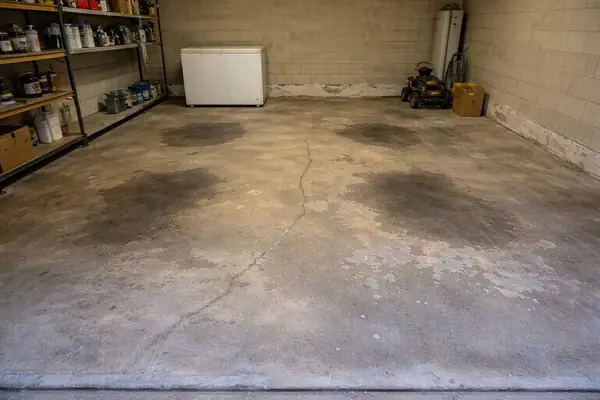 Before
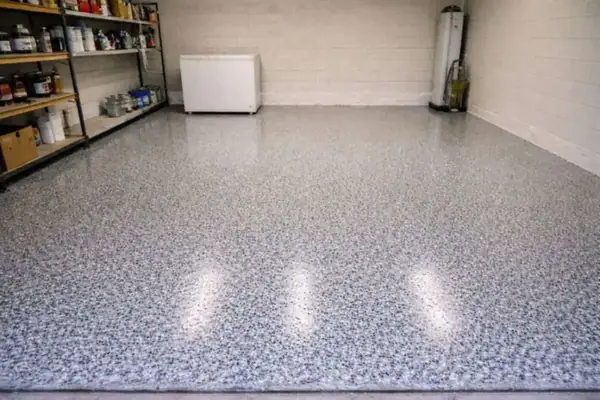 After
What an Epoxy Garage Floor Does for You
Six reasons Salt Lake homeowners coat the garage, from the first snow to the last hot day.
Sun
Ready for Summer Sun
Hot July sun at altitude is hard on bare or painted concrete. Flake floors finish with a UV-resistant protective topcoat, and you pick the sheen.
Why coatings peel at the door →Sealed
Salt and Oil Stay on Top
Magnesium chloride residue, a leaking oil pan, washer fluid: on a chemical- and stain-resistant floor it stays on the surface rather than in the concrete, and a mop takes it up.
Grip
Grip When the Snow Melts
Snowmelt dripping off the car and wet boots make smooth concrete slick. Flake texture helps, and slip-resistant additives are available where you want extra grip, like the strip inside the door.
112 nights
Through the Freezing Nights
That is how many nights a year dip to freezing at the airport. Sealing the slab keeps salty water from soaking in and freezing in the surface, which is how scaling starts at the apron.
Squeegee
Quick Cleanup After a Storm
After a snowy week, push the slush out with a squeegee and mop the salt film off with warm water. No wax and no special products: a seamless floor gives grime nowhere to settle.
Checked
Slab Checked Before Coating
Moisture coming up through concrete can lift any coating. The slab is checked before anything is applied, and if it reads damp or needs other work first, you hear that before you commit.
From Free Visit to Finished Garage
Five steps, from measuring the garage to handing over the finished floor.
Free Visit & Quote
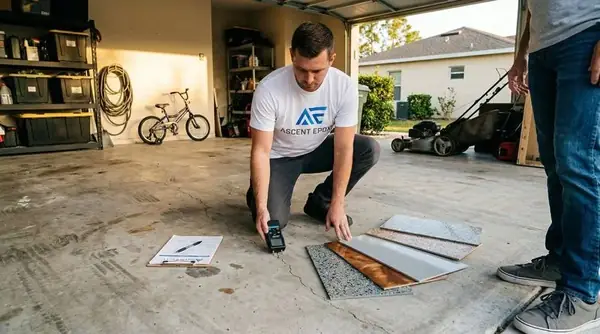
Someone from the installation crew comes out, measures the floor, looks at cracks, stains and any old coating, and shows you flake, metallic and solid-color samples. You get a free, no-obligation quote. Schedule yours free.
Surface Preparation
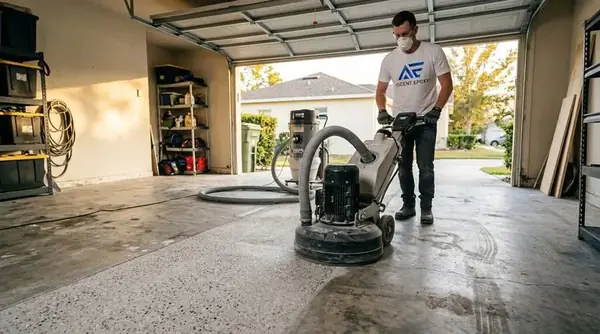
Every garage floor is diamond ground. The grinder removes the weak top layer, old sealer and paint, so the base coat can soak into open concrete. Old epoxy that is lifting comes off at this stage too.
Crack & Joint Repair
Cracks, chips and pitted spots are repaired so the base coat goes down on a sound surface. A crack that is still active is pointed out to you first, since no floor coating holds a moving slab together.
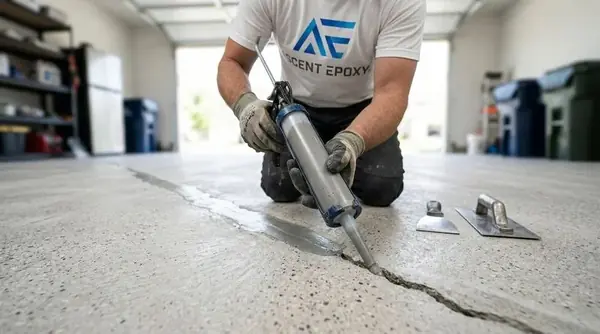
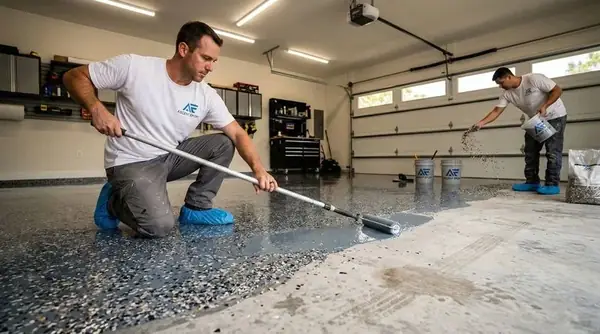
Base Coat, Flake & Topcoat
A slab-penetrating epoxy base coat goes down in your color, the flake is broadcast at the density you picked (or the metallic or solid color goes on), and a protective topcoat, UV-resistant on flake floors, seals it in matte, semi-gloss or high-gloss.
Cure & Walkthrough
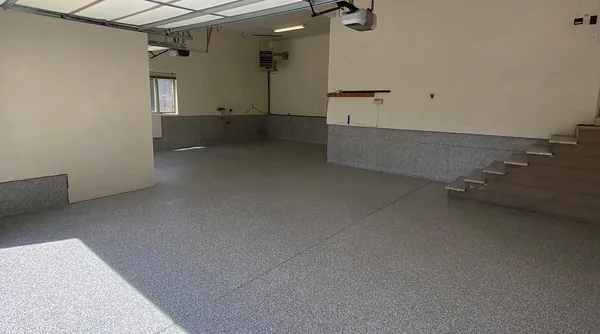
Before the crew leaves, you walk the finished floor together, get care tips for salt season and hear when it is ready for foot traffic and for the car, which depends on the product and the temperature.
Ready to Start? Step 1 Is Free.
Book a free, no-obligation visit and talk through finishes for your own space.
Pick a Look, Then a Sheen
Flake, metallic or a solid color, finished in matte, semi-gloss or high-gloss. Polyaspartic systems are available too.
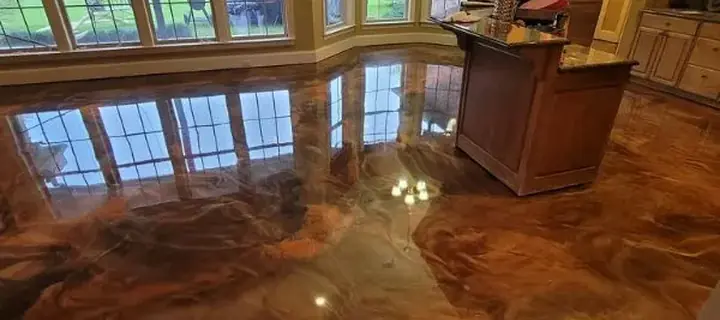
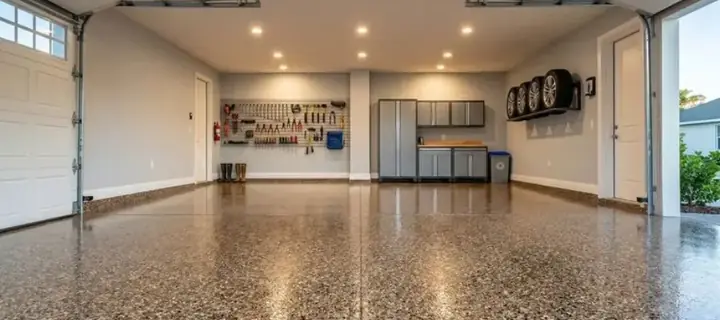

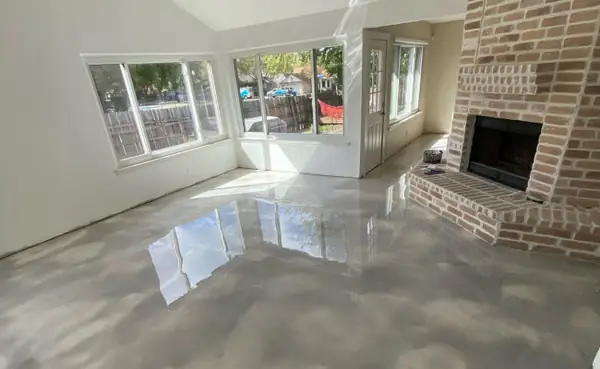

Epoxy Garage Floor Looks
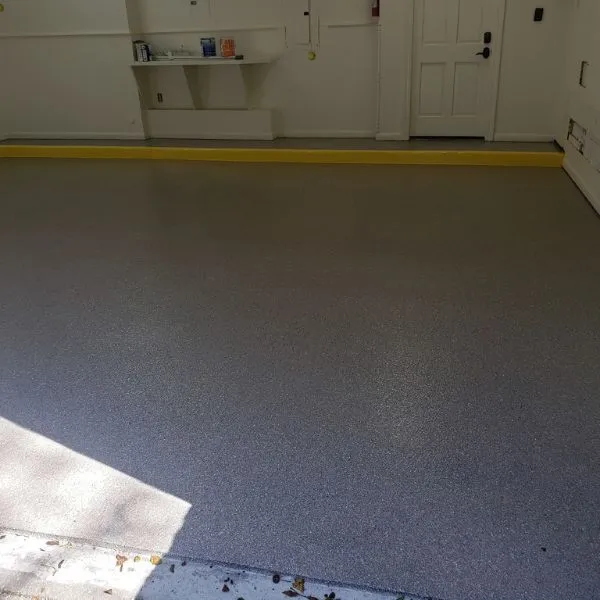
Flake, the usual garage pick, in two looks. Bring photos of floors you like to the free estimate.
Garage Floor Epoxy Questions
Answers for Salt Lake County homeowners planning a garage floor.
There is no set price, because no two garages are alike: the size, the shape the slab is in (cracks, pitting, old coatings), the system and sheen you pick and how much grinding and repair it needs all count. Someone comes out, measures and gives you a free quote with no obligation. Call (801) 618-0565, or see our Salt Lake City cost guide for what moves the number.
Often, with planning. Coatings have to go down within the product's temperature range, and a garage slab in January can be colder than the air around it, so the installer checks conditions and schedules around them. Summer brings the opposite: hot, very dry afternoons. Booking in early fall gets the floor sealed before the first freeze, which usually arrives around the end of October.
We don't put a number of years on it, because the answer depends on the grinding and repair, the system and how much use the garage gets. Rinsing road salt off in winter helps a lot. When the topcoat finally wears, it can often be recoated rather than replaced, and you get a straight answer about your own slab at the estimate.
It varies with the product and the temperature, so the crew gives you the times for your floor at the walkthrough when the job is done. Most garage floors are installed over about two days.
Not over it. Old paint, sealer or epoxy comes off first, by diamond grinding or shot blasting, so the new system bonds to bare concrete. What is on your floor gets looked at during the free visit, and the removal is part of the quote.
Design your garage floor.
Try finishes on a floor like yours and get a typical Salt Lake County price range with your free-estimate request.
Open Floor Studio →