Epoxy Floor Repair Salt Lake City: Strip, Fix & Recoat
Peeling epoxy at the door, a cracked slab or a coating worn thin: the old material comes off by grinding or shot blasting, the concrete is repaired and the floor is recoated.
Why Floor Coatings Fail in Salt Lake County
A failed coating usually shows where it went wrong. Lifting along the garage door line points to salty meltwater working under the edge. Bubbles on a basement floor point to moisture rising through the slab. Patches letting go where the tires sit point to a coating too thin or soft for the job. And a coating that peels off in sheets nearly always means the concrete was never properly ground before it went down.
Salt Lake County gives every one of those weak spots a workout. Road salt and magnesium chloride soak the garage apron through a freeze season that runs from about the end of October into April, and Salt Lake City's building code rates concrete weathering exposure as severe. Add older slabs, with Census figures showing a quarter of the city's homes built before 1940, and there are plenty of patched, painted and previously coated floors to sort out.
Then there is ordinary wear: a dull lane through a store, ruts where pallet jacks turn, a gouge where something heavy landed. Rolling a fresh coat over it without dealing with the cause only repeats the failure. A coating also cannot hide cracks or stop a slab from moving; if the concrete itself is heaving or settling, that is a job for a concrete or structural pro, and you will hear so before any quote.
So the first visit is about the cause. The crew looks at where and how the coating let go and checks the slab for moisture. Then the repair follows: failed coating comes off by diamond grinding or shot blasting down to sound concrete, cracked and damaged areas are repaired, and the floor is recoated with a system suited to the room. In a garage that usually means flake under a UV-resistant protective topcoat.
Repairs We Handle
Garages, basements, shops and warehouses. What gets done depends on how the coating failed and what the room is for.
Apron
Garage Apron Repair
The apron catches the most salty slush, so it is often the first place a coating lets go. The loose edge is ground back to sound concrete, the surface is repaired, and the new coating is carried right out to the door line.
Why door edges fail →Basement
Basement Coating Repair
Bubbles in a basement coating usually mean moisture coming up through the slab. The failed coating comes off and the slab is checked before anything new goes down. If water is getting in, that has to be solved first; a coating is not waterproofing.
Business
Shop & Office Recoats
A dull lane through a store or a scuffed office lobby often needs a recoat rather than a new floor, and the work can be scheduled around your hours.
Warehouse
Warehouse Spot Repair
A gouged patch or a chipped joint doesn't mean the whole floor has to go. Damaged areas on warehouse and shop floors can be ground out and rebuilt while the rest of the building keeps working.
Care
Care in Salt Season
Rinse road salt and magnesium chloride film off the floor through the winter instead of letting it dry on, sweep grit before it scratches, and use mats that breathe rather than rubber-backed ones that trap moisture.
Recoat first
Recoat Before You Tear Out
A sound slab rarely needs to be torn out and repoured. Removing the old coating and recoating is usually the simpler fix, and you get a straight answer on what your floor needs.
See what sets the price →Garage Apron Repair: Where Salt Does the Most Damage
Snow melts off the car and pools just inside the door, so the apron soaks up more salt water than any other part of the floor. When the coating or the concrete there starts to chip or scale, the strip can be repaired on its own before the damage spreads.
- Loose coating removed by diamond grinding, down to concrete that is still sound.
- Scaled or chipped concrete repaired before any coating goes back on.
- New coating carried out to the door line, where meltwater sits longest.
- An honest call on whether fixing the apron is enough or the whole floor is due.
Five Steps to a Repair That Holds
Find the cause, take off what failed, repair the concrete, recoat, then hand over care tips.
Free Assessment
Someone from the crew comes to your home or business, looks at where and how the coating let go and tells you what is likely behind it. Free, no obligation. Schedule yours free.
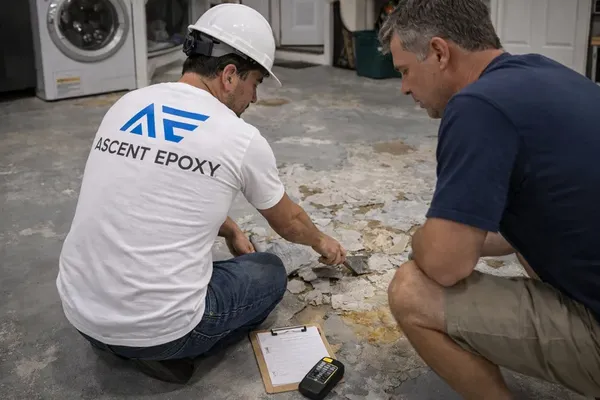
Diagnosis
The slab gets a moisture check and the remaining coating is checked to see how well it still holds. That separates moisture from below, poor prep and the wrong product for the room.
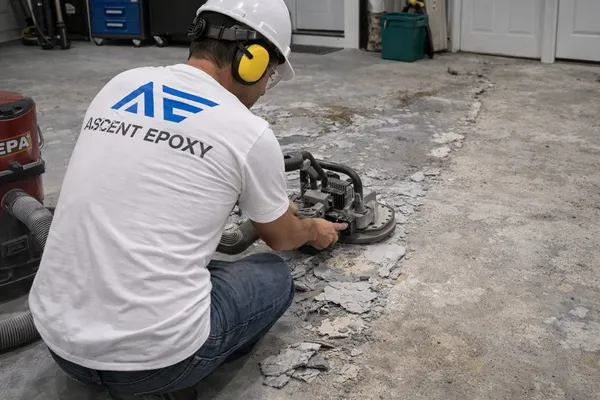
Surface Preparation
If the old coating is still sound, it is ground and recoated. If not, it comes off completely by diamond grinding or shot blasting, down to bare concrete.
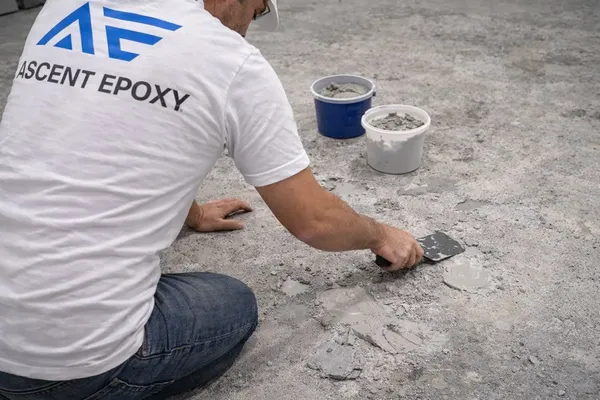
Repair & Re-Coat
Cracked and damaged concrete is repaired, then the new system goes down: flake, metallic or solid color in a home, or a commercial system where the room calls for one.
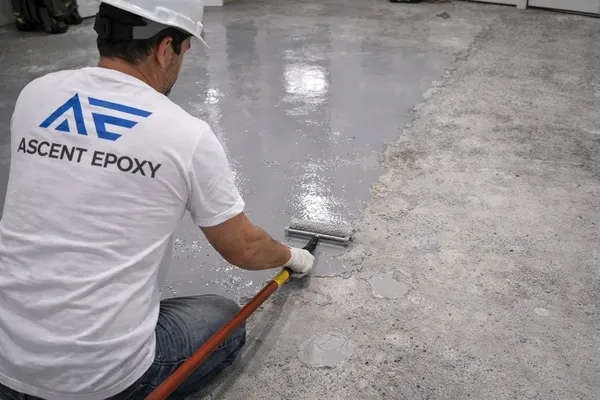
Cure & Walkthrough
The cure is planned around the temperature and the product's instructions. At the walkthrough you get care tips for salt season so the new coating keeps its looks.
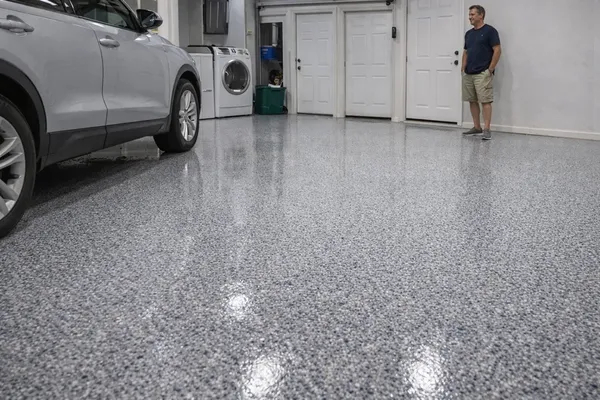
Ready to Start? Step 1 Is Free.
Book a free assessment to find out what went wrong with your floor.
Same Look or a New One
A recoat is a good moment to change things: match what you had, or pick a different look and sheen.
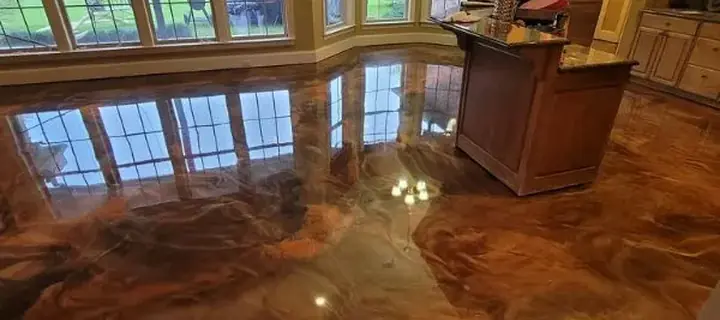
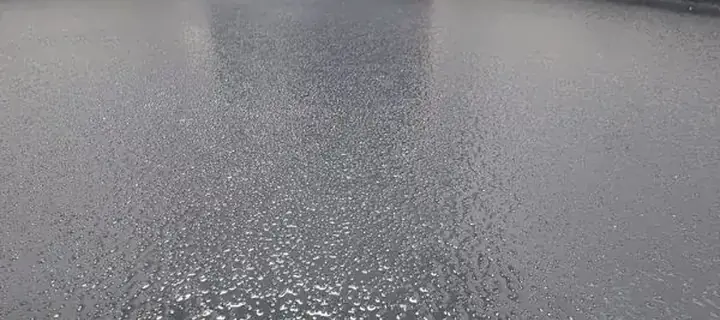

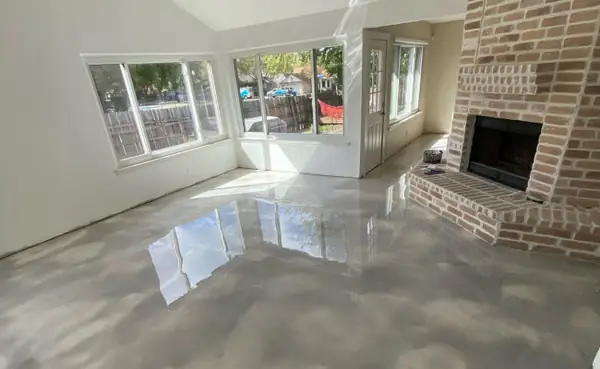

Before and After
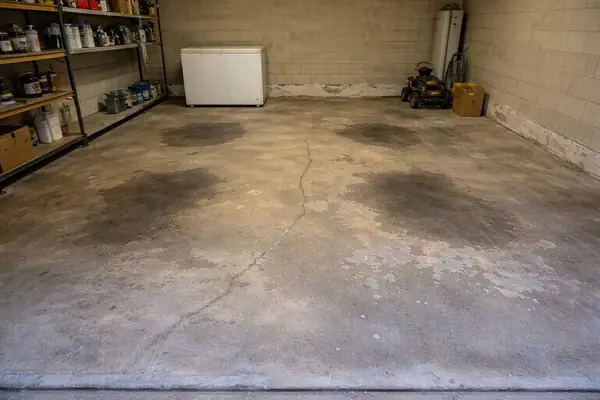
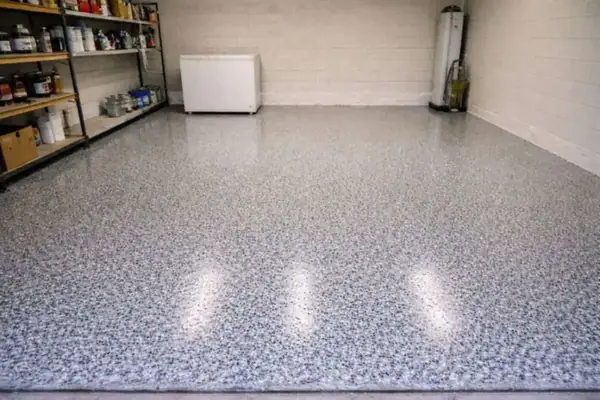
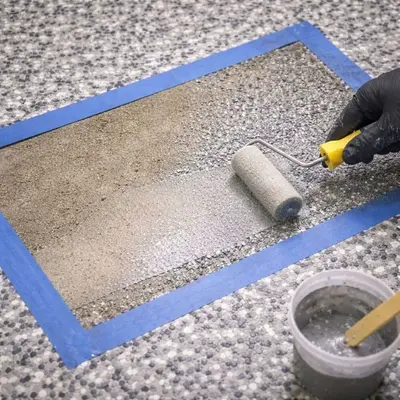
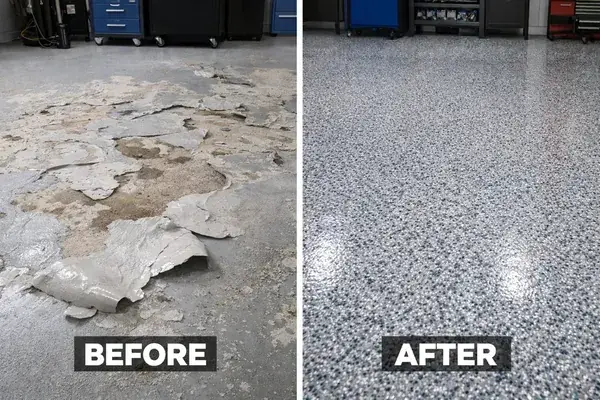
Example photos of a worn slab, repaired and coated. Your own floor gets looked at during the free assessment.
Floor Repair Questions
Answers for Salt Lake County homeowners and businesses with a coating that has let go.
Most failures come down to four causes: moisture rising through the slab, salty meltwater working under the edge at the door, a coating too thin or soft for the traffic, or concrete that was never properly ground before coating. Plenty of floors have more than one.
Older slabs and basements that have taken on water are more likely to have a moisture problem, so the slab is checked before any repair is recommended.
Only if it is still firmly attached, in which case it is ground and recoated. If it is lifting, contaminated or sits on a damp slab, it comes off by diamond grinding or shot blasting, down to bare concrete, or the new coat would fail the same way.
Adhesion and moisture are checked on site before either route is recommended.
That depends on how much of the floor has failed, its size, whether the old coating has to come off completely and what repairs the concrete needs. An apron repair is a smaller job than a full recoat, and a recoat is usually a smaller job than a new floor.
The assessment is free and the quote comes before any work starts. Our Salt Lake City cost guide covers what sets the price of a new floor.
Sometimes. The failed coating comes off and the slab is checked before anything new goes down. If water is coming in through cracks, from outside or from below, that has to be solved first, because no floor coating keeps water out.
Groundwater sits close to the surface in parts of the valley, especially on the west side, so a basement floor that keeps failing deserves a look at the cause before another coat.
Sweep grit off and clean it often. In winter, rinse road salt and magnesium chloride film off the garage floor rather than letting it dry on, and use mats that breathe instead of rubber-backed mats that trap moisture. In a business, a dust mop and a neutral cleaner do most of the work.
Once the topcoat starts to dull where traffic is heaviest, call; dealing with it then is simpler than a repair later.
Design your epoxy floor.
Try finishes on a floor like yours and get a typical Salt Lake County price range with your free-estimate request.
Open Floor Studio →