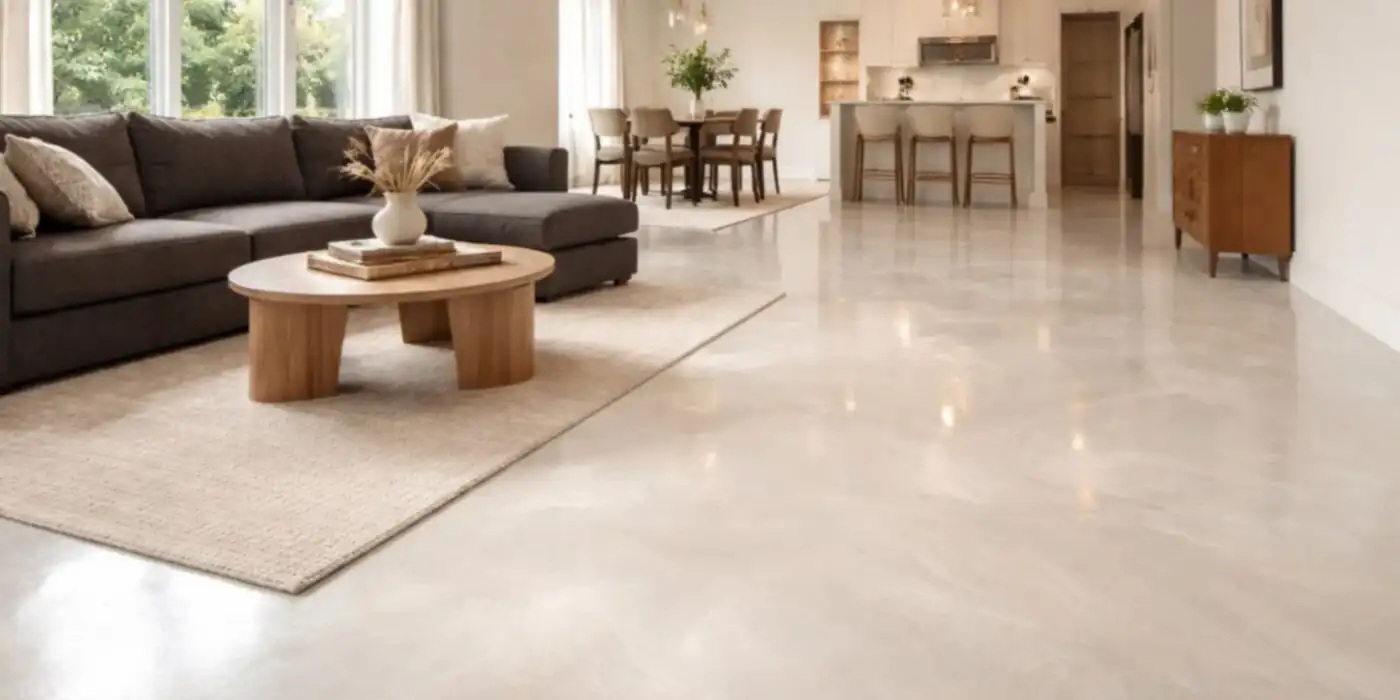
Epoxy is a manufactured chemical coating, and calling it “green” would be a stretch. There is still an honest environmental argument for it, and most of it is about what you don't throw away. Coating a sound concrete slab you already own avoids breaking it up, hauling the rubble off and pouring a new one. A sealed floor that wipes clean with warm water and a mild cleaner also means less reliance on strong degreasers. That's the case we'll make for homes across Salt Lake County, and we'll be clear about where it stops.
Whether your home is an older house in Salt Lake City proper or a new build in Herriman, the questions are the same: can the floor you have be kept, and what goes into finishing it? To talk about your own slab, call (801) 618-0565.
What “Eco-Friendly” Can Honestly Mean
Flooring ads love words like “non-toxic” and “green.” A few of those labels are backed by product testing, many aren't, and every product is different. So here is our line:
- What we will say: keeping and coating a sound slab creates far less demolition waste than replacing it; a coated floor is easy to clean and resists stains and chemicals; and you can ask exactly which products will go down on your floor.
- What we won't say: that a coating is certified green, that it makes the air in your home cleaner, or that it waterproofs a basement. We haven't tested those claims, so we don't make them.
That leaves three real points: the concrete you keep, the way the floor is cleaned for years afterwards, and the questions worth asking about odor while it cures.
Odor, Ventilation and What to Ask
Most floor coatings give off some smell while they cure. How much depends on the product: resins and topcoats differ, and the label and data sheet for each one set out how the space should be ventilated. If someone at home is sensitive to smells or has a breathing condition, or if the room shares air with the living space, raise it when the estimate is booked. Ask which products the installer plans to use and whether a lower-odor option would suit your floor; you'll get a straight answer either way.
Winter changes the logistics more than the chemistry. NOAA's airport normals show about 112 nights a year at or below freezing, and garage doors across the valley tend to stay shut from the end of October to early April. So ask how the space will be ventilated during and after the work, and plan to keep children and pets out until the installer says the floor is ready. Most garage floors are installed over about two days, and the crew will tell you when the floor can take foot traffic and when it can take a car.
Coating the Slab You Already Own
The biggest waste saving in a floor project is the concrete you don't replace. Taking out a garage or basement slab means breaking it up, filling a dumpster with rubble and placing new concrete. Coating it means grinding off a thin layer of the surface, repairing cracks and damaged spots, and applying coats measured in fractions of an inch. When the slab is sound, that's the lighter path almost every time.
“Sound” is the important word. A floor coating is cosmetic and protective, not structural, and it won't fix a slab that is still moving. The Salt Lake Valley is built on old lake-bed sediments left by ice-age Lake Bonneville, and ground conditions vary from one part of the valley to another; some slabs crack because of what's underneath them. If a crack looks active, you'll hear that before any coating goes down, and the honest advice is to have it looked at first.
Save the Slab You Already Have
Bring your questions about the slab, the products and ventilation to a free on-site estimate anywhere in Salt Lake County.
Old and New Slabs Across the Valley
Homes in Salt Lake County span well over a century, so “keep the slab” means different things in different places. Census figures sketch three broad groups:
- Salt Lake City's older neighborhoods. About a quarter of the city's homes were built before 1940. The Avenues, a local historic district since 1978, has houses going back to the late 1860s. Garage and basement slabs in areas like these have had many winters to collect oil, salt and patches.
- Mid-century and 1970s–80s suburbs. In the middle of the county, Millcreek and Holladay grew mostly in the post-war years, while Taylorsville and Murray are largely 1970s and '80s. Many of those slabs are still sound and simply tired.
- The newer south and west valley. Herriman's median home dates from 2013 and South Jordan's from 2007, and Daybreak, which opened in 2004, is planned for up to 20,000 homes. These slabs are young and usually uncoated, so the job is protection rather than rescue.
On an older slab, a grind, some crack repair and a coating can take a floor from stained and pitted to genuinely usable, with no new concrete trucked in. For newer homes, coating early keeps salt and oil from soaking in to begin with, and the slab stays in service instead of being replaced later.
Basements: Dampness and Clean-Up
Of all the rooms in a house, the basement is where owners worry most about what goes on the floor. The room is enclosed and often shares air with the rest of the house, so it's the place where asking about products and ventilation before work starts matters most.
Basements are also where water shows up. The Utah Geological Survey has mapped shallow groundwater on the west side of the Salt Lake Valley and warns that a high water table can cause basement flooding. That's one reason the slab is checked for moisture before it's coated. A coated floor does not waterproof a basement or stop groundwater. What you do get is a sealed surface you can mop out and wipe down, rather than carpet or raw concrete that soaks up whatever the water carried in. If a slab isn't ready for a coating, you'll be told.
Old Floor Tile and Dark Adhesive
Some older basements were finished long ago with 9-inch or 12-inch vinyl tile set in black adhesive, and some tile and adhesive from that era contains asbestos. Intact material is generally best left undisturbed, and it should never be ground or sanded before it has been tested. If your basement has old tile or dark adhesive, mention it when you book the estimate. If testing comes back positive, an asbestos abatement specialist removes it before any floor work starts.
Where the Waste Savings Come From
- Keep the slab. Coating a sound floor avoids demolition, hauling and a new pour.
- Repair instead of replace. Cracks and damaged patches are repaired rather than cut out and re-poured.
- Remove only the old finish. A failed coating or paint comes off by diamond grinding or shot blasting, and the concrete itself stays in place.
- Clean with less. A coated surface resists stains and chemicals, so warm water and a mild cleaner handle most messes without strong degreasers.
- Straight advice. If your floor only needs a good clean or a small repair, that's what you'll hear.
Frequently Asked Questions
Is epoxy flooring environmentally friendly?
It's a chemical coating, so we don't call it green. The honest case is narrower: coating a sound slab avoids tearing out and re-pouring concrete, and a sealed floor cleans up with water and a mild cleaner instead of strong degreasers.
Can I ask for a lower-odor product?
Yes, ask. Raise it when you book the estimate, and the installer will tell you which products they plan to use on your floor and how the space will be ventilated while it cures.
Will the house smell while the floor cures?
Expect some odor while the coating cures. Ventilation follows the product's instructions, which in a garage usually means the big door open and fans running, and it's wise to keep children and pets clear until the installer says the floor is ready.
Can an old slab in Salt Lake City be coated rather than replaced?
Most of the time, if the concrete is sound. Plenty of older slabs need nothing more than grinding, crack repair and a coating. A crack that is still moving gets flagged before any coating goes on, along with the advice to have it checked first.
Will a coating keep water out of my basement?
No. A floor coating doesn't waterproof a basement or hold back groundwater; it gives you a sealed surface that is quick to mop out and clean. The slab gets a moisture check first, and you'll hear if it isn't ready.
My basement has old vinyl tile. What then?
Old vinyl tile and black adhesive can contain asbestos, so they should be tested before anyone grinds them. Mention them when you book; if a test comes back positive, an asbestos abatement specialist removes the material before floor work begins.
Ask About Your Own Slab
We cover homes across Salt Lake County, from Salt Lake City and Millcreek to West Jordan, Draper and Herriman. Call (801) 618-0565 or request a free on-site estimate, and bring your questions about products and ventilation to the visit. For how the valley's weather treats a coated floor, read how Salt Lake City's climate affects epoxy floor durability; for the spot where garage coatings usually give out first, see why epoxy floors peel at the garage door.
Related Articles
How Salt Lake City’s Snow, Salt and Sun Test an Epoxy Floor
Freezing nights, road salt, dry summer heat and strong sun: what each means for a coated floor.
Why Salt Lake City Epoxy Floors Peel at the Garage Door
Why the strip inside the overhead door is usually the first place a garage coating gives out.